Quick answer
When a mobile business buys a work vehicle, four ATO rules matter most: GST credits for GST-registered businesses; the car limit, which caps depreciation and GST credits on passenger cars ($69,883 for 2026–27) but usually not on vans designed to carry a tonne or more; the $20,000 instant asset write-off, now permanent for eligible small businesses; and fuel tax credits, available for heavy vehicles over 4.5 tonnes.
Key points
- GST-registered businesses can generally claim a GST credit on a business vehicle with a tax invoice, apportioned for any private use.
- The 2026–27 car limit is $69,883; the maximum GST credit on a car is $6,353.
- The car limit applies to passenger vehicles designed to carry fewer than nine passengers and less than one tonne.
- The $20,000 instant asset write-off is permanent from 1 July 2026 for businesses with aggregated turnover under $10 million — each asset's full cost must be under the limit.
- Fuel tax credits apply to heavy vehicles over 4.5 tonnes GVM, not light vehicles on public roads.
The price on the windscreen isn’t the real cost of a work vehicle. Depending on how your business is set up, GST credits, depreciation, the instant asset write-off, stamp duty and fuel tax credits can move the true cost up or down — and they change your cash flow in the months after you buy. This guide walks through the rules that matter most for couriers, tradies, food truck owners and other mobile businesses, using the ATO’s current thresholds.
It’s general information, not tax advice. Your accountant should confirm how each rule applies to your vehicle and your business.
Can I claim the GST on a work van?
If your business is registered for GST and the vehicle is used for business, generally yes. The ATO says you’re generally entitled to claim a GST credit for the GST included in the vehicle price, provided you have a tax invoice.
Two catches:
- Private use. If the vehicle is used partly privately, you can only claim the business proportion. The ATO says you must include only the proportion of the cost that relates to business use at label G10 on your activity statement.
- The car limit. For vehicles that count as “cars” and cost more than the car limit, the GST credit is capped at one-eleventh of the limit. For 2026–27, the ATO puts that maximum at $6,353.
The GST credit comes back through your BAS, so a big vehicle purchase can reduce what you owe for that quarter — or produce a refund. Time it with your bookkeeper. Our page on BAS time for mobile traders explains the due dates.
What is the car limit, and does it apply to my van?
The car limit caps the cost you can use to calculate depreciation on a car. The ATO’s 2026–27 figure is $69,883 (it was $69,674 for 2025–26).
Crucially, the ATO says the car limit applies to passenger vehicles (other than motorcycles) designed to carry fewer than nine passengers and a load of less than one tonne. That means:
| Vehicle | Car limit likely to apply? |
|---|---|
| Sedan, SUV or wagon | Yes |
| Dual-cab ute designed to carry under one tonne | Often yes |
| Ute or cab-chassis designed to carry one tonne or more | Usually no |
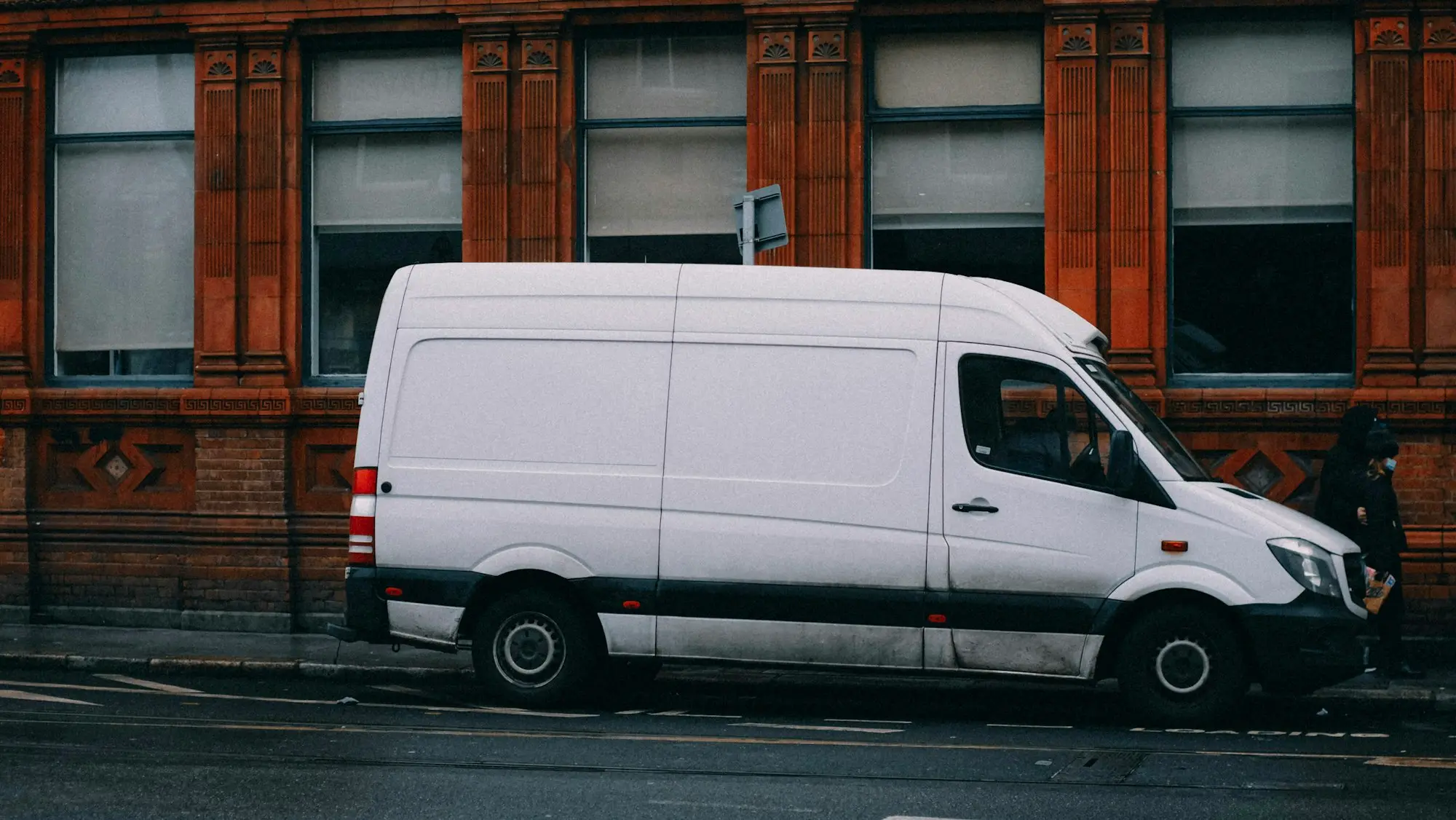
| Delivery van designed to carry one tonne or more | Usually no |
| Minibus designed for nine or more passengers | No |
| Food truck on a light-truck chassis | Usually no |
“Designed to carry” means the manufacturer’s rated payload, not what you actually carry. Check the specifications — some dual-cab utes sit either side of the one-tonne line depending on the model.
How does the $20,000 instant asset write-off work?
The instant asset write-off lets eligible small businesses immediately deduct the business portion of an asset’s cost, rather than depreciating it over several years. The key rules, according to the ATO:
- Eligibility. Your aggregated turnover must be less than $10 million, and you must use the simplified depreciation rules.
- Threshold. The threshold is $20,000, and the ATO’s new legislation page says the government has permanently increased it to $20,000 from 1 July 2026, with the measure now law.
- Full cost under the limit. The ATO stresses that the entire cost of the asset must be less than the limit — even if you only use part of it for business.
- Timing. The asset must be first used or installed ready for use in the income year you claim it.
For most mobile businesses, a whole van or food truck will cost more than $20,000, so it goes into the small business pool and is depreciated instead. But plenty of the gear around it — a generator, a coffee grinder, a pressure washer, diagnostic tools, a drawer system bought separately — may fall under the threshold. See generator and equipment finance and ute and van fit-out finance.
Buying a van before the end of the financial year? See if you qualify for funding — a one-minute form, and your credit file stays out of it.
What about stamp duty and on-road costs?
Most states and territories charge motor vehicle duty when a vehicle is registered or transferred. Revenue NSW, for example, says duty is due when you register a new vehicle, transfer registration or register an imported second-hand vehicle in NSW for the first time, and that Service NSW collects it. Rates and exemptions differ by state and by vehicle type, so check with your state revenue office.
Add duty, registration, compulsory third party insurance and any comprehensive insurance to your project cost. The truck-stop calculator has a line for exactly these costs, so the funding covers the real number.
Fuel tax credits: heavy vehicles and generators
Fuel tax credits are often overlooked by small mobile businesses. The ATO’s rules:
- Heavy vehicles. Vehicles with a GVM greater than 4.5 tonnes can claim fuel tax credits for fuel used on public roads, reduced by the road user charge.
- Light vehicles. Vehicles with a GVM of 4.5 tonnes or less can’t claim for fuel used on public roads. They can only claim for fuel used off public roads or on private roads.
- Generators. The ATO lists electricity generation by a commercial, stationary or portable generator as an eligible activity.
- Registration. You must be registered for GST when you acquire the fuel and for fuel tax credits when you claim.
If you’re choosing between a large van and a light truck, the heavy vehicle line also brings different licensing and regulation. The National Heavy Vehicle Regulator defines a heavy vehicle as one with a GVM or aggregate trailer mass of more than 4.5 tonnes. See courier van finance for more on sizing a vehicle.
Illustrative example: three purchases, three outcomes
These examples are illustrative only.
A courier buys a new delivery van designed to carry more than one tonne for $58,000 including GST. She’s registered for GST and uses the van only for business. The car limit doesn’t apply, so she can generally claim the full GST credit on her next BAS, and the van is depreciated through the small business pool because it costs more than $20,000.
A mobile dog groomer buys a dual-cab ute rated under one tonne for $78,000 to tow her grooming trailer, and uses it partly privately. The car limit applies, capping the cost used for depreciation and the GST credit, and both are reduced further for private use.
A coffee van owner replaces a noisy petrol generator with a new inverter generator costing well under $20,000. His business turnover is under $10 million, so the generator may be immediately deductible, and he keeps generator fuel receipts separately for fuel tax credits.
Tax rules don’t decide the purchase
It’s easy to let tax drive the decision — buying a van in June “for the write-off” when the business doesn’t need it yet. A deduction reduces tax on profit; it doesn’t make an unnecessary purchase free. Buy the vehicle the business needs, when it needs it, and let the tax rules make it a little cheaper.
Keep the paperwork together
Put the tax invoice, finance documents, registration papers and any logbook in one folder, digital or paper. The ATO expects business records to be kept for five years, and you’ll need them for GST credits and depreciation.
Fund the van, keep the cash flow smooth
A new work vehicle is a big commitment, and the tax timing affects your next few BAS statements as much as the purchase itself. Once you know what you’re buying, tell us about it. Asking is quick and credit-check free, and your details go to one real person — not blasted out to a dozen lenders.
Please fill it in accurately, including whether the vehicle is new or used and how it’ll be used. It helps us match you to the right option the first time.
Frequently asked questions
What is the car limit for 2026–27?
The ATO says the car limit for 2026–27 is $69,883. It caps the cost you can use to work out depreciation on a car, and the maximum GST credit on a car is one-eleventh of the limit, $6,353.
Does the car limit apply to vans and utes?
The car limit applies to passenger vehicles designed to carry fewer than nine passengers and a load of less than one tonne. Many vans and utes designed to carry a tonne or more fall outside it, but check your vehicle's specifications with your accountant.
Can I use the $20,000 instant asset write-off on a food truck?
Only if the asset's full cost is less than $20,000 and your business is eligible (aggregated turnover under $10 million, using simplified depreciation). Most complete food trucks cost more than that, but some separately purchased equipment may qualify.
Is the $20,000 write-off permanent now?
The ATO's new legislation page says the government has permanently increased the instant asset write-off threshold for small businesses to $20,000 from 1 July 2026, and that the measure is now law.
Can I claim fuel tax credits for my van?
Not for a light vehicle (4.5 tonnes GVM or less) used on public roads. Heavy vehicles over 4.5 tonnes GVM can claim, reduced by the road user charge. Fuel for a portable generator is listed as an eligible activity.
Do I pay stamp duty on a work van?
Most states charge motor vehicle duty when a vehicle is registered or transferred. In NSW, Revenue NSW says duty is payable when you register a new vehicle or transfer registration.